

Permadur Lifting Magnets
Electrical and Manual Solutions
Product Brief
Product Description
Electrical Magnet Overview
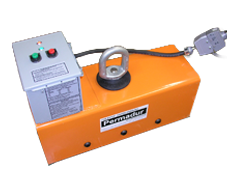
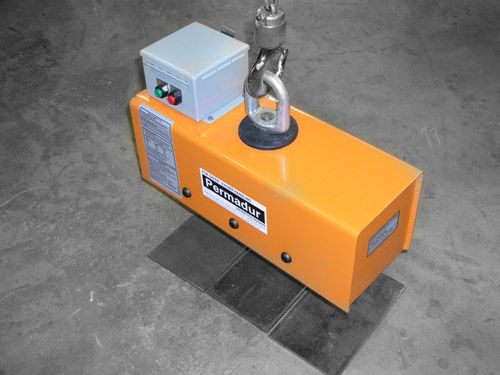
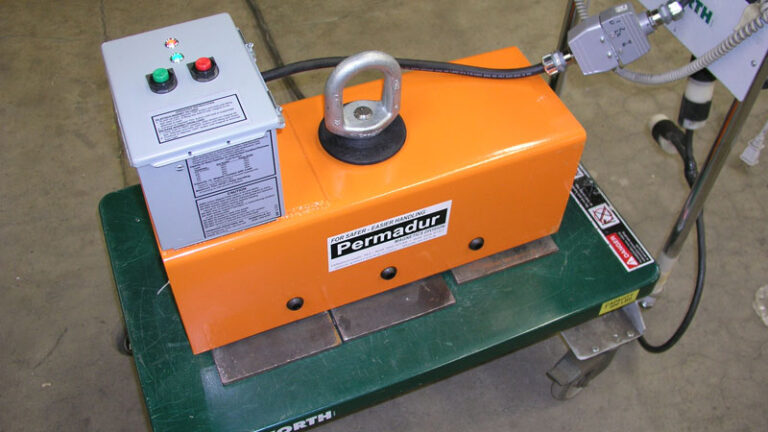
Permadur Electro-Permanent Magnets combine permanent magnetic strength with electric switching convenience. They require power only for activation or release, maintaining a secure grip even in the event of power loss. Built for reliability, they deliver energy-efficient, fail-safe lifting with an excellent strength-to-weight ratio. Available with customer-supplied AC or rechargeable battery in any capacity.
Electrical Magnet Key Benefits
- Power required only for switching
- High strength-to-weight ratio
- Customizable pole shoes for varied applications
- Special Control options from ON/OFF pushbutton with safety indicator light to radio remote controls available
Electrical Magnet Types
Rectangular Magnets
(For Sheet, Plate, and Block Applications) This style of Electrically Controlled Permanent Lifting Magnet has the functionality to handle standard structural, plate, & block material.
Bipolar Magnets
(For Rounds, Angles, Structural, and Plate Applications) This unique style of Electrically Controlled Permanent Magnet has the functionality to handle standard structural / plate material but by adding customized pole shoes, the bipolar magnet can handle rounds and angle material as well.
Manual Magnet Overview
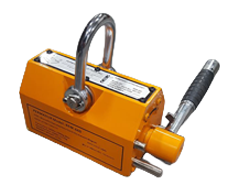
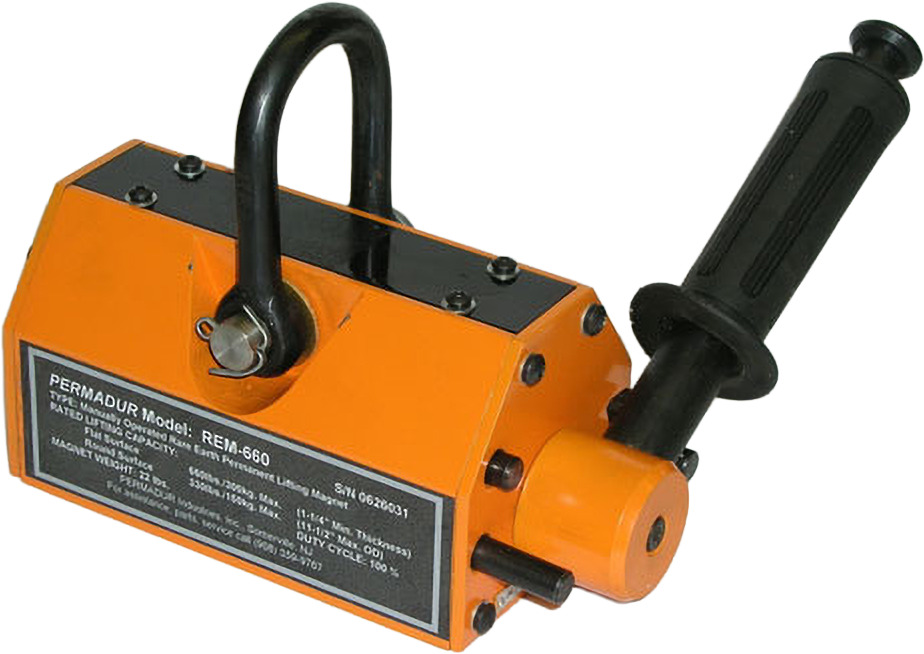
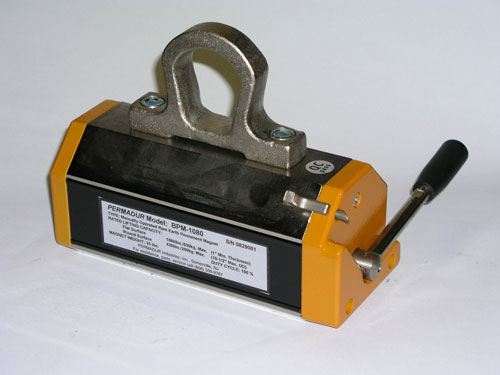
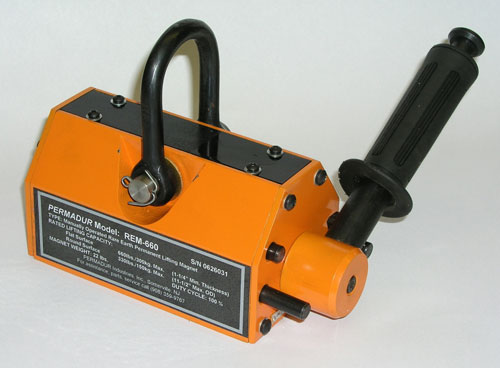
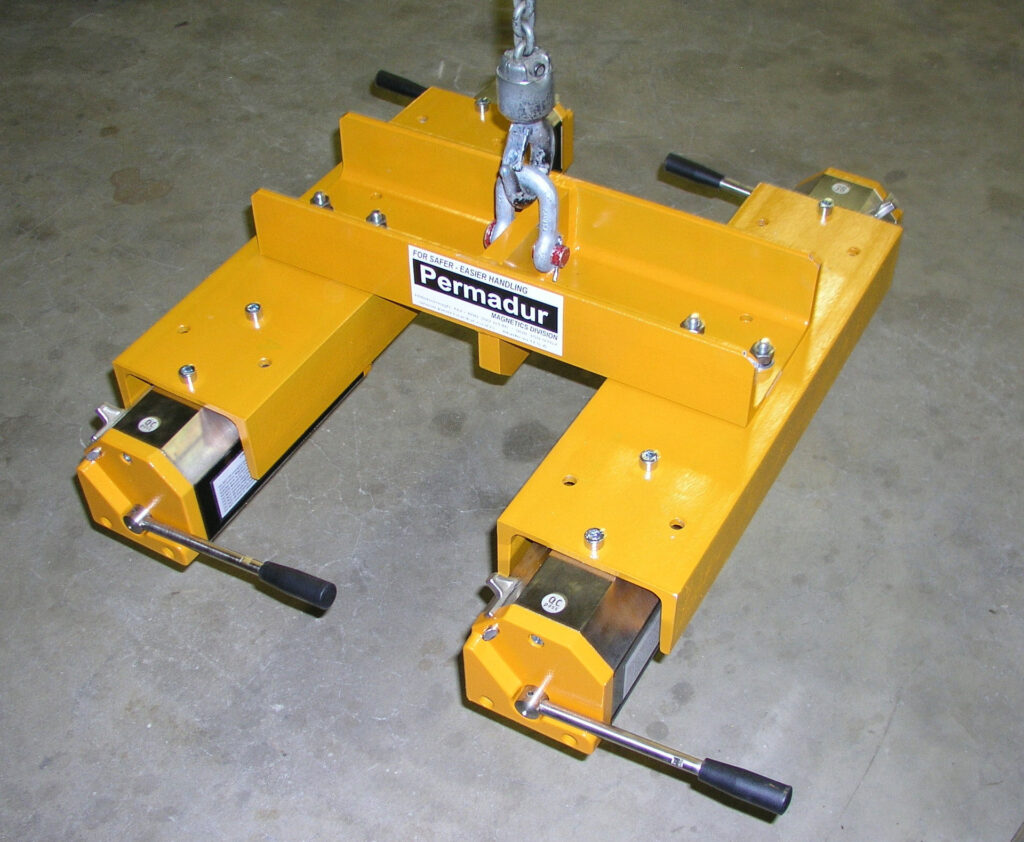
Permadur Manual Magnets provide dependable lifting through a simple lever design with integrated safety locks. Built with rare-earth materials, they deliver strong capacity in a compact, rugged form. They require no external power, making them ideal for shops, fabrication yards, and field use.
Manual Magnet Key Benefits
- No power required
- Rugged, low-maintenance design
- Lever control with safety lock
- Compact and portable
Manual Magnet Types
BPM Style Manual Magnets
REM Style Manual Magnets
Models
- Tri polar (TP) and Fivepole (FP) series of magnets for sheet, plate and block
- Bipolar (BP) series magnets for round, angles, structural, and plate
- REM/BPM for manual magnet applications
Use Cases
Trusted in production lines, automated handling systems, machine shops, and remote sites where reliable lifting is essential.
Lifting Magnet Specifications
Complete product specifications for all Permadur lifting magnet series
BPM Series — Manual Rare Earth Lifting Magnets
Key Features
- Tremendous Magnet Capacity to Weight Ratio
- Simple Lever Operation with Safety Lock
- 3 to 1 Safety Factor
- Extremely Compact, Light, Portable
- Utilizes NdFeB — Most Powerful Permanent Magnetic Material
- Great Durability & Economical
| Part Number | SWL Flat (lbs) | SWL Round (lbs) | Magnet Wt (lbs) | Body Size (W×L×H) | Headroom (in) | Min Thickness (in) | Max OD (in) |
|---|---|---|---|---|---|---|---|
| BPM-275 | 275 | 110 | 7 | 3-1/8 × 4-3/4 × 3-1/8 | 7-1/4 | 3/4 | 11-1/2 |
| BPM-550 | 550 | 220 | 13 | 3-1/4 × 7-1/8 × 3-1/4 | 5-5/8 | 13/16 | 11-1/2 |
| BPM-1080 | 1,080 | 430 | 33 | 4-1/4 × 9-5/8 × 4 | 7-1/2 | 1 | 15-1/2 |
| BPM-2160 | 2,160 | 860 | 77 | 5-1/4 × 13-3/8 × 5-1/2 | 9 | 1-9/16 | 17-1/2 |
| BPM-3240 | 3,240 | 1,295 | 154 | 6-5/8 × 16-3/8 × 6-3/4 | 11-5/8 | 1-3/4 | 19-1/2 |
| BPM-4320 | 4,320 | 1,720 | 209 | 7-3/8 × 17-3/8 × 7-3/4 | 12-3/8 | 2-3/16 | 23-1/2 |
REM Series — Manual Rare Earth Lifting Magnets
Key Features
- Tremendous Magnet Capacity to Weight Ratio
- Simple Lever Operation with Safety Lock
- 3 to 1 Safety Factor
- Extremely Compact, Light, Portable
- Utilizes NdFeB — Most Powerful Permanent Magnetic Material
- VERY Economical
| Part Number | SWL Flat (lbs) | SWL Round (lbs) | Magnet Wt (lbs) | Body Size (W×L×H) | Headroom (in) | Min Thickness (in) | Max OD (in) |
|---|---|---|---|---|---|---|---|
| REM-250 | 250 | 110 | 7 | 2-9/16 × 3-5/8 × 2-3/4 | 4-1/2 | 1 | 8-1/2 |
| REM-660 | 800 | 330 | 22 | 3-1/2 × 6-1/2 × 3-3/4 | 6 | 1-1/4 | 11-1/2 |
| REM-1320 | 1,600 | 650 | 53 | 4-5/8 × 9-3/8 × 4-3/4 | 8-1/2 | 1-9/16 | 15-1/2 |
| REM-2200 | 2,500 | 1,100 | 110 | 6-7/8 × 10-5/8 × 6-5/8 | 11 | 2-3/8 | 17-1/2 |
| REM-5000 | 5,000 | 2,200 | 275 | 9-1/16 × 15 × 9-5/8 | 12 | 2-3/4 | 19-1/2 |
Rectangular Magnets — For Sheet, Plate, and Block
TP Series (8" Width)
| Model | Width (in) | Length (in) | Height (in) | Weight (lbs) | Max Potential Capacity (lbs) | Max Recommended Application (lbs) |
|---|---|---|---|---|---|---|
| TP-600 | 8 | 7¼ | 7¾ | 90 | 2,400 | 600 |
| TP-1000 | 8 | 10⅝ | 9 | 150 | 4,000 | 1,000 |
| TP-2000 | 8 | 21½ | 9 | 300 | 8,000 | 2,000 |
| TP-3000 | 8 | 32¼ | 9 | 450 | 12,000 | 3,000 |
| TP-4000 | 8 | 43 | 9 | 600 | 16,000 | 4,000 |
| TP-5000 | 8 | 53¾ | 9 | 750 | 20,000 | 5,000 |
| TP-6000 | 8 | 64½ | 9 | 900 | 24,000 | 6,000 |
| TP-7000 | 8 | 75¼ | 9 | 1,050 | 28,000 | 7,000 |
| TP-8000 | 8 | 86 | 9 | 1,200 | 32,000 | 8,000 |
| TP-9000 | 8 | 96¾ | 9 | 1,350 | 36,000 | 9,000 |
| TP-10000 | 8 | 107½ | 9 | 1,500 | 40,000 | 10,000 |
FP Series (16" Width)
| Model | Width (in) | Length (in) | Height (in) | Weight (lbs) | Max Potential Capacity (lbs) | Max Recommended Application (lbs) |
|---|---|---|---|---|---|---|
| FP-1200 | 16 | 7¼ | 9 | 180 | 4,800 | 1,200 |
| FP-4000 | 16 | 21½ | 9 | 600 | 16,000 | 4,000 |
| FP-6000 | 16 | 32¼ | 9 | 900 | 24,000 | 6,000 |
| FP-8000 | 16 | 43 | 9 | 1,200 | 32,000 | 8,000 |
| FP-10000 | 16 | 53¾ | 9 | 1,500 | 40,000 | 10,000 |
| FP-12000 | 16 | 64½ | 9 | 1,800 | 48,000 | 12,000 |
| FP-14000 | 16 | 75¼ | 9 | 2,100 | 56,000 | 14,000 |
| FP-16000 | 16 | 86 | 9 | 2,400 | 64,000 | 16,000 |
| FP-18000 | 16 | 96¾ | 9 | 2,700 | 72,000 | 18,000 |
| FP-20000 | 16 | 107½ | 9 | 3,000 | 80,000 | 20,000 |
Bipolar Magnets — For Rounds, Angles, Structural, and Plate
| Model | Width (in) | Length (in) | Height (in) | Weight (lbs) | Max Potential Capacity (lbs) | Max Recommended Flat (lbs) | Max Recommended Round (lbs) |
|---|---|---|---|---|---|---|---|
| BP-250 | 4⅜ | 7 | 8¾ | 45 | 1,200 | 300 | 250 |
| BP-400 | 6½ | 10⅝ | 8 | 70 | 2,000 | 500 | 400 |
| BP-500 | 4⅜ | 14¼ | 8¾ | 90 | 2,400 | 600 | 500 |
| BP-800 | 6½ | 22 | 8 | 140 | 4,000 | 1,000 | 800 |
| BP-1000 | 4⅜ | 28½ | 8¾ | 180 | 4,800 | 1,200 | 1,000 |
| BP-1200 | 6½ | 33 | 8 | 210 | 6,000 | 1,500 | 1,200 |
| BP-1600 | 6½ | 44 | 8 | 280 | 8,000 | 2,000 | 1,600 |
| BP-2000 | 6½ | 55 | 8 | 350 | 10,000 | 2,500 | 2,000 |
| BP-2400 | 6½ | 66 | 8 | 420 | 12,000 | 3,000 | 2,400 |
| BP-2800 | 6½ | 77 | 8 | 490 | 14,000 | 3,500 | 2,800 |
| BP-3200 | 6½ | 88 | 8 | 560 | 16,000 | 4,000 | 3,200 |
| BP-3600 | 6½ | 99 | 8 | 630 | 18,000 | 4,500 | 3,600 |
Need Help Selecting the Right Magnet?
Our experts can help you choose the perfect lifting solution for your specific application.
Get a QuoteMedia


Click to view full-size images.
Related From our Blog
How to Choose Between Material Handling Magnets, Plate Lifting Magnets, and Vacuum Lift Systems
Facing Uncertainty in Your Material Handling Decisions? When you're responsible for material...
Struggling to Lift Thin Plates Without Warping? Secure Them Properly With Specialized Plate Lifting Magnets
When lifting thin metal plates, it's frustrating to see them bend or warp unexpectedly. Even minor...
Fighting Overheating in Your Lifting Equipment? Why a Permanent Lifting Magnet Stays Cool and Secure
Many facilities rely on electromagnets for lifting steel and iron, but that reliance can bring...
Problem / Cause / solution / benefit
Problem
Many shops, fabrication yards, and industrial worksites struggle with inefficient, risky, and time-consuming methods for lifting and moving heavy steel plates, blocks, and structural parts. Traditional rigging — using slings, chains, hooks, or clamps — often requires multiple workers, consumes valuable time, demands extensive setup, and increases the risk of dropped loads or material damage.
Cause
Because traditional lifting methods rely on mechanical rigging, manual labor, and complex setup, each move becomes a bottleneck. Slings and chains need careful placement and secure fastening; clamps and hooks can scratch or dent surfaces; often more than one operator is needed; and each lift requires time to rig, check safety, and maneuver. Over time, this slows down throughput and increases labor costs — not to mention the heightened safety risks in busy or fast-paced production environments
Solution
Permadur’s Lifting Magnets — both electro-permanent and manual models — provide a secure, efficient, and easy-to-use alternative. The electro-permanent versions combine magnetic lifting strength with the convenience of electric switching (power needed only to engage or release, and load remains secure even if power fails). The manual magnets offer rugged, low-maintenance lifting with a simple lever and safety-lock design and require no external power. These magnets quickly attach to ferrous materials and let a single operator lift and move heavy loads with minimal setup, no slings or chains, and no risk of surface damage.
Benefit
Using Permadur Lifting Magnets transforms material handling: significantly faster load handling and turnarounds, reduced labor and rigging costs, simpler operation, and fewer workers needed. Safety increases as risk of dropped loads and manual-lift injuries decreases; surface damage to steel is minimized; and overall productivity goes up — enabling smoother workflow, faster job cycles, and lower operational costs per lift.