


Permadur Multiple Part Handling Systems
Maximize torch-on time
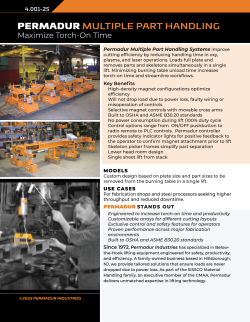
Product Brief
About Permadur
Multiple Part Handler Series
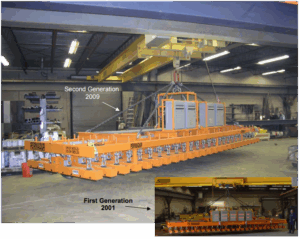
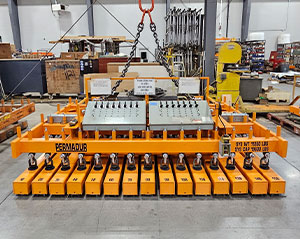
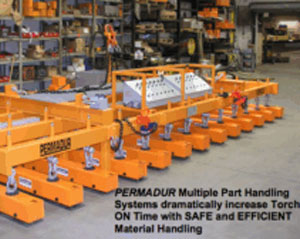
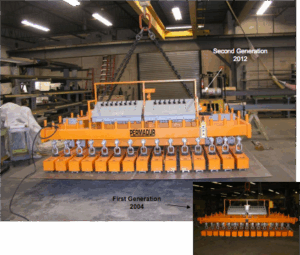
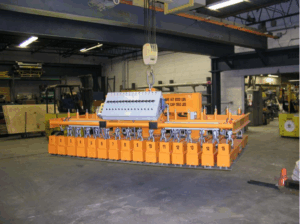
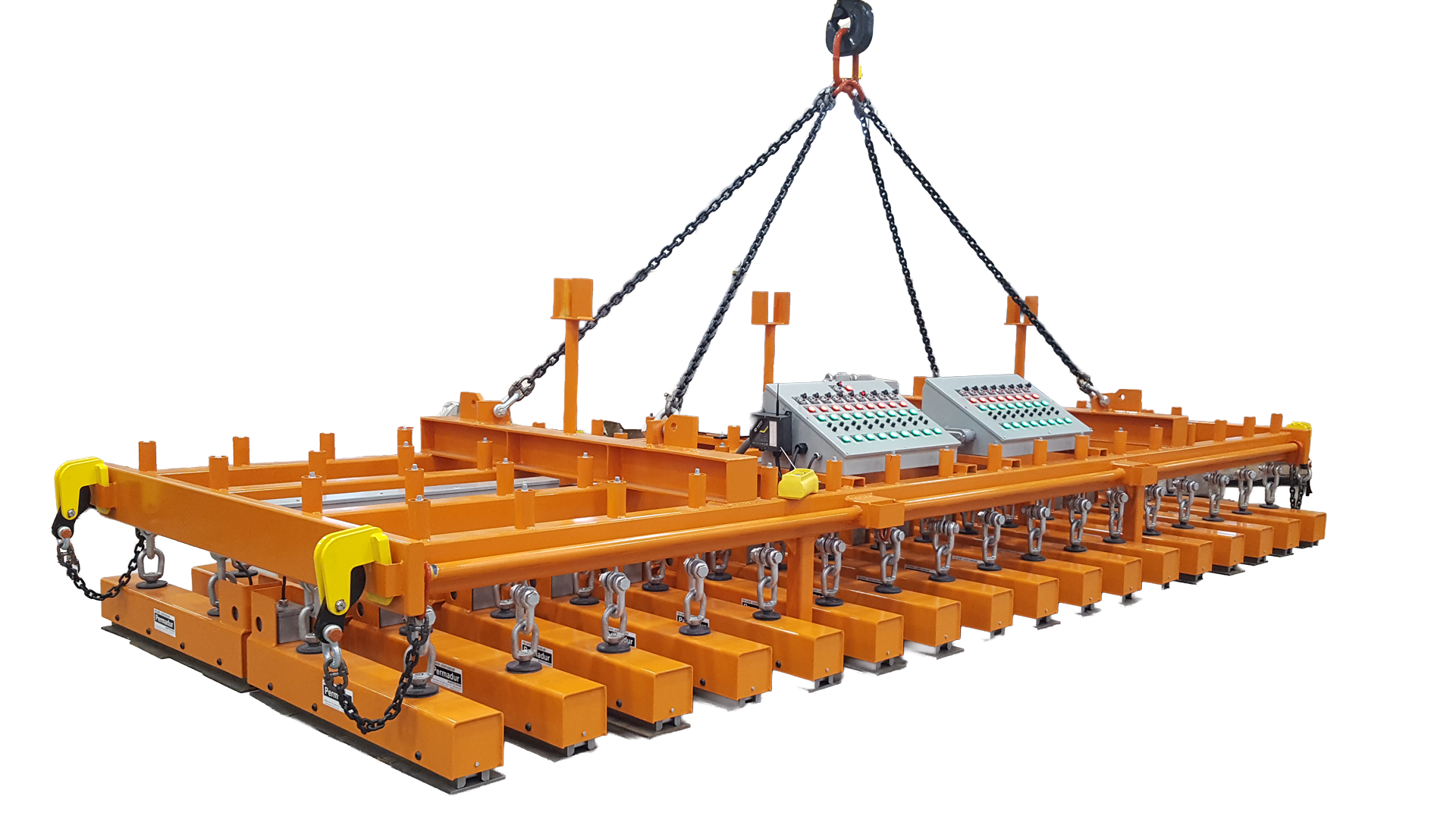
Permadur Multiple-Part Handling Magnet Systems are designed to significantly reduce material handling time in plasma cutting and steel processing operations. By lifting cut parts and skeletons in a single pick, these systems increase torch "ON" time, improve throughput, and lower operating costs for steel fabricators and steel service centers.
Instead of manually separating parts or making multiple lifts, operators can safely handle more material at once — reducing labor, improving safety, and keeping production moving.
Product Specifications
- Loss of electrical power
- Faulty wiring
- Misoperation of controls
- Single plate handling from a stack
- Remote control options available
- Various custom loadbeam configurations to fit application
- Dependable relay analog control systems
- Unaffected by cold temperatures
- Integration with overhead crane controls (if needed)
- Consumes no power during lift
- Requires lower electrical power supply than competitor magnets
- 100% duty cycle — no downtime for magnet cooling
- AC power supply as standard
- No backup battery system required
- Simplified wiring — no battery maintenance
- Rated safe working load provides 4-to-1 safety factor
- On/off controls provide positive indication of magnet field absorption
- One-man plate handling increases efficiency
- No installation costs
- Available as a KIT with load beam drawings included
How It Works
Permadur systems use high-density magnet configurations mounted to custom load beams to securely lift multiple parts or skeletons at the same time. Selective magnet controls and movable cross arms allow operators to target specific areas of the plate, making part separation and removal faster and more controlled.
Once engaged, the magnets hold the load mechanically and do not rely on continuous power during the lift, providing stable and predictable handling even in demanding production environments.
Key Benefits
- Increases plasma table productivity by reducing offload time
- Allows removal of parts and skeletons in a single lift
- Reduces manual labor and operator fatigue
- Improves safety and minimizes dropped or shifting loads
- Boosts torch "ON" time for higher overall throughput
Engineered for Safety & Reliability
- Designed and built to OSHA and ASME B30.20 standards
- Engineered to the appropriate safety factor for your specific application
- Positive on/off indication with operator feedback lights
Will not drop a suspended load due to:
- Loss of electrical power
- Faulty wiring
- Misoperation of controls
Features & Capabilities
Typical Applications
- Plasma and oxy-fuel cutting tables
- Fabrication shops and steel service centers
- High-volume plate processing operations
- Facilities seeking reduced handling time and increased throughput
The Result
With Permadur Multiple-Part Handling Magnet Systems, shops move more material with fewer lifts and fewer operators. Handling becomes safer and more predictable, material damage is reduced, and productivity increases across every shift.
Media


Click to view full-size images.
Related From our Blog
Understanding How The Mining Industry Uses Industrial Magnets
The mining industry is one of many industries that rely on industrial magnets. While there are...
Safety and Proper Use of An Industrial Neodymium Magnet
Neodymium magnets are extremely useful for industrial-scale lifting and are relied upon in many...
How to Properly Operate A Heavy Lifting Device
Operating heavy lifting devices is a serious business. There are many moving parts and hazards to...
Problem / Cause / solution / benefit
Problem
In many fabrication shops, warehouses, and industrial operations, handling multiple parts at once — such as bundles of sheet metal, stacked plates, grouped components, or sets of similar parts — is inefficient, risky, and labor-intensive. Using slings, chains, clamps, or manual means to lift multiple items often leads to uneven loads, material damage, mis-handling, longer cycle times, and increased chance of operator injury or dropped parts.
Cause
Because conventional lifting and rigging methods are designed for single-part loads, attempts to lift multiple parts together rely on makeshift solutions: awkward placement of slings or clamps, uneven weight distribution, repeated manual adjustments, and reliance on multiple operators. This leads to slow setup times, inconsistent load security, potential damage to parts (scratches, bends), and increased safety risks — especially when loads shift or are imbalanced. Additionally, manual handling becomes a bottleneck as throughput needs increase.
Solution
Permadur’s Multiple-Part Handling Systems provide engineered lifting/handling solutions designed to safely, securely, and efficiently lift and transport groups of parts as a unit. These systems are tailored to accommodate bundled, stacked, or multiple-part loads — ensuring balanced lifting, stable rigging, and secure transport. By using purpose-built hardware instead of improvised rigging, these systems allow one operator (or fewer operators) to lift and move multiple items at once with proper load distribution, minimal manual readjustment, and reduced risk of part damage or load shift.
Benefit
Using Permadur Multiple-Part Handling Systems dramatically improves efficiency, safety, and throughput. Operations complete lifts faster and with fewer workers, reducing labor costs and time per lift. Material quality is preserved — fewer scratches, bends, or dropped parts — lowering scrap and rework. Safety improves through more stable, predictable lifts, reducing risk of operator injury or accidents. Overall workflow becomes more streamlined: higher volume and speed per shift, lower damage rates, reduced labor overhead — delivering better productivity and cost-effectiveness for handling grouped loads.